Every air conditioning and refrigeration system has a quiet problem hiding beneath its coils. As warm, humid air passes over the cold evaporator fins, moisture condenses and drips into a drain pan. It is a normal part of how cooling works. But that pan, which is dark, damp and often warm, is also an ideal place for microorganisms to grow.
Left untreated, the result is a thick, slimy layer known as biofilm. It blocks drain lines, causes odors, leads to overflows and water damage, and can become a source of microbial contamination in the building. Cleaning it out by hand is unpleasant, repetitive and, in many cases, only a temporary fix.
There is a more permanent approach: UV-C disinfection of the condensate water and drain pan surfaces. In this article we explain how the process works, why it is so effective, where it is used, and what to look for when choosing a system.
What is drain pan biofilm?
Biofilm is a community of microorganisms such as bacteria, fungi and algae that attach to a surface and wrap themselves in a protective, sticky matrix of their own making. You will often see it as a slimy film or sludge, ranging from clear to green, brown or black.
HVAC drain pans are almost perfect incubators:
- Constant moisture. Condensate is produced whenever the system is cooling or dehumidifying.
- Darkness. Most pans sit inside the air handling unit, out of sight and out of light.
- Nutrients. Dust, pollen, skin cells and other organic particles are carried in the airstream and settle in the pan.
- Moderate temperatures. The environment around a cooling coil is far from hostile to microbial growth.
Once biofilm takes hold, it tends to keep coming back. The protective matrix makes the organisms inside far harder to remove with simple rinsing or surface wipes than free-floating microbes in the water.
The problems biofilm cause
A neglected drain pan is not just a cosmetic issue. Common consequences include:
Blocked condensate drains: Slime accumulates in the pan and drain line until water can no longer flow away. The pan overflows, damaging ceilings, equipment and finishes, and in many systems a float switch will shut the unit down.
Unpleasant odors: Microbial growth produces the musty, sour smell that people often associate with “dirty” air conditioning.
Poorer indoor air quality: Microorganisms in the pan and on the coil can be disturbed by airflow and moisture, so a contaminated pan can contribute to wider contamination within the air handling unit.
Reduced efficiency: Where growth spreads from the pan to the coil, it can restrict airflow and impair heat transfer, making the system work harder for the same cooling output.
Higher maintenance costs: Frequent call-outs, manual cleaning and chemical treatments all add up over the life of a system.
Introducing UV-C drain pan disinfection
UV-C is a band of ultraviolet light, typically around 254 nanometres, that is highly effective at inactivating bacteria, viruses, mould and other microorganisms. It has been used for decades in water treatment, healthcare and food production, and it is increasingly specified for HVAC systems.
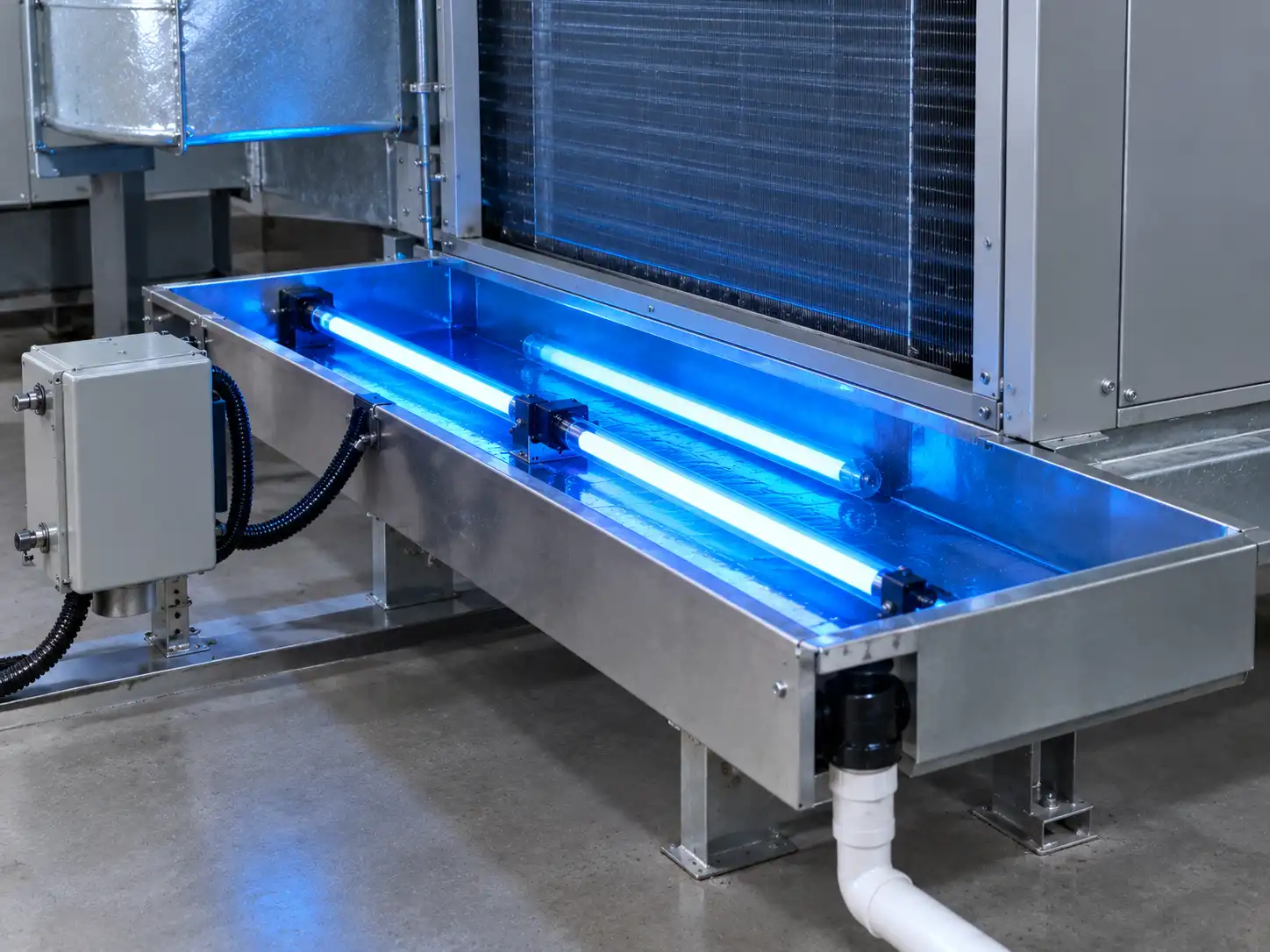
In this application, the technique is sometimes called HVAC condensate disinfection, drain pan decontamination or biofilm prevention. Specialist UV-C lamps, housed in watertight quartz sleeves, are installed so that they sit directly in the drain pan water. They run continuously (or whenever the system is operating), treating both the water and the pan itself.
How it works
Submersible UV-C systems work in two complementary ways.
1. Disinfecting the condensate water
When microorganisms in the condensate pass through or near the UV-C field, the light penetrates their cells and damages their DNA or RNA. Once that genetic material is disrupted, the organism can no longer replicate or cause infection. No chemicals are added, and nothing is left behind in the water.
Because the lamp is immersed directly in the water, the light is delivered right where it is needed, without the losses that can occur when UV has to travel through air and across a distance.
2. Sterilising the surfaces of the pan
The light does not stop at the water. It radiates outward from the lamp, continually exposing the inner walls of the pan and the drain outlet area to germicidal UV-C. By treating those surfaces constantly, the system prevents microorganisms from settling, multiplying and building up the protective biofilm that normally causes blockages.
In other words, instead of cleaning up slime after it has formed, UV-C stops it forming in the first place.
Why quartz sleeves matter
The lamps used for immersion are designed specifically for the job. The lamp is enclosed in a quartz sleeve that is sealed against water. Quartz is used because it transmits UV-C light efficiently, resists degradation from UV exposure and is robust in damp conditions. The sleeve also protects the electrical components and helps keep the lamp at a stable operating temperature in cool, wet environments.
A good immersion system will be built with materials suited to constant water contact, and with seals and connections that are designed to stay watertight over the long term.
Benefits of UV-C in HVAC drain pans
- Chemical-free: There are no biocides to dose, store or dispose of, and no residues in the condensate.
- Continuous protection: Unlike a periodic clean or a one-off treatment, UV-C works around the clock while the system is running, so biofilm does not get a chance to re-establish.
- Fewer blockages and overflows: Keeping slime out of the pan and drain line helps condensate flow freely and reduces the risk of water damage.
- Odour reduction: Controlling microbial growth at the source tackles one of the root causes of musty smells.
- Lower maintenance: Less manual cleaning means fewer service visits and less downtime. Routine maintenance is typically limited to periodic lamp replacement and a visual check.
- Supports healthier air handling units: A cleaner pan is part of a wider strategy for good hygiene in air conditioning equipment, and it can be combined with UV-C coil irradiation for even greater protection.
- Low running costs: UV-C lamps draw modest power, and the savings from reduced cleaning, fewer faults and better system performance can offset the investment.
Where is it used?
Submersible UV-C drain pan systems are suited to a wide range of environments, including:
- Commercial and office buildings
- Hospitals, clinics and care homes
- Schools and universities
- Hotels and leisure facilities
- Retail units and shopping centres
- Data centres and server rooms with precision cooling
- Food production and storage facilities
- Commercial refrigeration and cold rooms
- Fan coil units, air handling units and packaged rooftop units
- Humidifiers and cooling equipment where standing water can accumulate
Wherever condensate collects and is hard to access, there is potential benefit in automating the hygiene process.
Choosing the right system
Not every drain pan is the same, and the right UV-C solution depends on the equipment and the operating conditions. When specifying a system, consider:
Pan size and geometry. The lamp needs to reach the water and cover the pan surfaces effectively. Long, narrow pans may need a different lamp length or configuration to a wide, shallow tray.
Condensate volume and flow. Systems producing a lot of condensate, or where water level varies, need a lamp positioned so that it remains submerged when it should be, and operates safely when it is not.
Lamp type and output. Choose lamps with a UV-C output suitable for the application, designed for immersion, and supplied with the right quartz sleeve and fittings.
Power supply and controls. Consider the voltage, ballast or driver requirements, and whether you want the lamp to be interlocked with the fan or the system’s operation.
Safety. UV-C can harm eyes and skin on direct exposure. A properly designed installation keeps the lamp contained within the unit, with access panel interlocks or warning labels where needed, and clear maintenance procedures.
Ease of maintenance. Look for designs that make lamp replacement simple and quick, with readily available spares.
Maintenance and lamp replacement
UV-C lamps gradually lose output over time, even when they still appear to be glowing. To keep the system working effectively, lamps should be replaced at the interval recommended by the manufacturer, which is commonly around once a year for continuous operation. Quartz sleeves should also be inspected and cleaned if mineral deposits or film appear, as this can reduce the amount of UV-C reaching the water.
A simple scheduled routine of checking the lamp, cleaning the sleeve and replacing the lamp at the recommended interval is usually all that is needed to keep the system performing as designed.
UV-C as part of a wider hygiene strategy
Drain pan disinfection is one piece of the puzzle. Many building owners and facilities managers combine it with:
- UV-C coil irradiation, which keeps the cooling coil and fins free of microbial growth
- Regular filter changes
- Routine inspection and cleaning of air handling units
- Good humidity control
Together, these measures help maintain cleaner equipment, better airflow and a healthier indoor environment.
How Arden Ultraviolet can help
At Arden Ultraviolet, we specialise in UV-C disinfection solutions. We can supply:
- Submersible and immersion UV-C systems for HVAC drain pans and condensate water
- Replacement UV-C lamps and quartz sleeves for new and existing installations
- Technical advice to help you select the right lamp, length and configuration for your equipment
- Solutions for a range of applications, from single air handling units to larger multi-unit projects
Whether you are an HVAC contractor looking for a reliable component supplier, a facilities manager trying to put a stop to recurring slime and blocked drains, or an OEM looking to build UV-C into your products, we would be glad to help.
Get in touch
If you would like to find out more about UV-C drain pan disinfection, or you need a quote on systems or replacement lamps, contact the Arden Ultraviolet team today. Tell us about your equipment and the problem you are trying to solve, and we will recommend the right solution.
Frequently asked questions
Does UV-C remove biofilm that is already there?
UV-C is primarily a preventive measure. It is best installed on a clean pan so that biofilm cannot form. If a pan is already heavily fouled, it should be cleaned manually first, and UV-C will then help keep it clean.
Is it safe to have a UV-C lamp in the drain pan?
Yes, when it is correctly specified and installed. The lamp is sealed within a watertight quartz sleeve and sits inside the unit, away from people. Always follow the manufacturer’s guidance and avoid looking directly at an operating UV-C lamp or exposing skin to it.
Will it work in a unit that is sometimes dry?
Lamps designed for immersion are generally also suitable for intermittent operation, but installation details matter. Speak to us about the pan layout and how the unit is used so we can advise on lamp positioning and controls.
Can I retrofit it to an existing system?
In many cases, yes. Submersible lamps are well suited to retrofit because they sit in the pan and need only a power connection. We can help you check suitability for your equipment.
How often do the lamps need replacing?
This depends on the lamp type and operating hours, but annual replacement is common for lamps running continuously. We can supply replacements and advise on a suitable schedule.