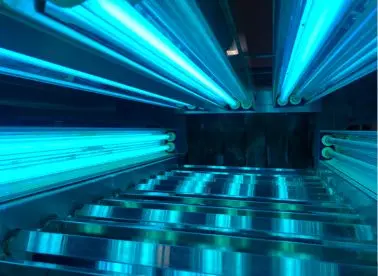
UV disinfection is used in food production as a preventive control. UV-C light damages the DNA and RNA of bacteria, moulds, yeasts and viruses, reducing the chance that small, unnoticed populations grow into contamination events. Factories install it to cut the probability of recalls, downtime and brand damage, not because they already have a contamination problem.
Key takeaways
- UV-C works continuously and passively, reducing microbial risk in air, on surfaces and in water.
- It supports HACCP-based, preventive food safety systems.
- It can improve air quality, extend shelf life and reduce reliance on some chemical disinfectants.
- It is not a standalone solution. Exposure time, intensity, line-of-sight, surface cleanliness and lamp maintenance all affect results.
- UV-C is hazardous to people, so proper safety assessment is essential.
Why would a food factory need UV if there are no contamination issues?
It is a fair question. If your site has a strong audit record and clean test results, why add another control?
Modern food manufacturing is built on prevention. A single contamination event can cost millions in product recalls, production downtime, wasted stock and reputational damage. By the time a pathogen is detected, contaminated product may already have left the building.
UV disinfection works on the same principle as insurance. Most days, nothing visible happens. The value appears when something would otherwise have gone wrong.
How does UV-C disinfection work?
UV-C is a short-wavelength band of ultraviolet light. When microorganisms are exposed to UV-C at sufficient intensity for sufficient time, the light damages their genetic material (DNA or RNA). This prevents them from replicating, which stops them from growing into a larger problem.
Because it is a physical process rather than a chemical one, UV-C leaves no residue and doesn’t require rinsing. That makes it attractive in food environments where chemical carry-over is a concern.
Continuous microbial risk reduction
Bacteria, moulds, yeasts and viruses can exist in a facility at low levels without causing any obvious problems. They may sit below detection thresholds, hide in hard-to-clean areas or fluctuate with conditions.
UV-C provides a constant, always-on barrier against these populations. Common targets in food production include:
- Airborne microbes in processing rooms
- Surface contamination on conveyors and packaging
- Water used in processing or cleaning
- Biofilm formation in pipes and tanks
Rather than waiting for a positive swab result, UV works in the background every hour the system is running.
Preventing contamination before it appears
Food safety systems are built around prevention, and UV fits neatly alongside the core elements:
- HACCP
- Environmental monitoring
- Hygienic design
- Preventive controls
Reactive approaches are costly. Waiting until contamination is detected often means:
- Product holds
- Production stoppages
- Root-cause investigations
- Possible recalls
Every one of these disrupts your schedule, your customers and your margins. A preventive layer like UV reduces the likelihood of reaching that point.
Protection against “unknown unknowns”
Even well-run factories face variables they can’t fully predict or continuously test for:
- Seasonal microbial fluctuations
- Temporary sanitation gaps
- Changes in employee traffic
- Variability in incoming raw materials
- HVAC contamination risks
Routine testing only captures a snapshot in time. UV offers a passive, always-on barrier that helps reduce risks which sampling programmes might miss. It doesn’t replace monitoring. It adds a safety margin between your tests.
Improving air quality in production environments
Airborne microbial load matters in many food sectors, particularly:
- Dairy
- Ready-to-eat foods
- Bakeries
- Meat processing
- Beverage filling
In these environments, UV-C is often installed within HVAC systems or as upper-room air disinfection. By reducing airborne microbial load, it helps maintain cleaner production areas and reduces the number of spoilage organisms that can settle on exposed product, equipment and packaging.
Extending shelf life and reducing waste
Shelf life is not only about pathogens. Spoilage organisms can shorten product life even when no harmful bacteria are present. They can:
- Reduce freshness
- Create off-odours
- Cause mould growth
- Increase waste
Reducing microbial load can slow spoilage and extend shelf life. That means less waste, better profitability and more flexibility in distribution, especially for products travelling longer routes or sitting in retail for extended periods.
Reducing reliance on chemical disinfectants
In certain applications, UV can reduce dependence on chemical disinfectants. These include:
- Water treatment
- Air handling
- Packaging sanitation
Potential benefits include:
- Lower chemical residues
- Reduced corrosion of equipment
- Fewer chemical handling risks for staff
- Less downtime for rinsing
It’s important to be realistic. UV usually complements sanitation chemicals rather than replacing them entirely. Think of it as an additional layer that can reduce the burden on your chemical regime, not a substitute for it.
Meeting regulatory and customer expectations
Large retailers and food brands increasingly expect layered food safety controls. A well-planned UV installation can support:
- Audit readiness
- Certification programmes
- Customer confidence
- Export requirements
Even if your factory has an excellent safety record, preventive investment demonstrates mature risk management. When a customer or auditor asks what you do beyond the minimum, UV is a tangible, documentable answer.
Protecting against rare but catastrophic events
Contamination incidents are statistically uncommon in well-run plants. But the consequences can be severe:
- Recalls
- Lawsuits
- Brand damage
- Lost contracts
- Regulatory scrutiny
The question for many operations isn’t “Will this probably happen?” but “Can we afford it if it does?” UV is a relatively modest, continuous investment against a low-probability, high-impact risk.
Typical UV applications in food factories
UV-C is flexible, and common installations include:
| Application | What it addresses |
|---|---|
| UV-C in HVAC ducts | Airborne microbes; coil and duct cleanliness |
| Conveyor belt surface treatment | Surface contamination during transit |
| Packaging sterilisation | Microbial load on packaging before filling or sealing |
| Bottle cap disinfection | Contamination risk at closure |
| Water disinfection systems | Process and cleaning water |
| Cleanroom air sanitation | Airborne contamination in controlled areas |
| Cold storage mould control | Mould growth in chilled environments |
The right solution depends on your products, layout, line speeds and existing hygiene controls.
Important limitation: UV is not a standalone solution
UV-C is powerful but not magic. Its effectiveness depends on:
- Intensity and exposure (dose): the UV dose delivered and duration of exposure
- Line-of-sight access: UV only treats what the light reaches; shadowed areas aren’t disinfected
- Cleanliness of surfaces: dirt, residue and product build-up can shield microbes
- Lamp maintenance: output declines over time, so lamps must be monitored and replaced
UV works best as part of a broader food safety system that includes cleaning, sanitation, filtration, environmental monitoring and process control. Treat it as a layer, not a cure-all.
UV safety: A critical part of any installation
UV-C can cause harm to skin and eyes, so any installation must be designed with people in mind. Good practice includes:
- Risk assessments before installation
- Enclosures, guarding and interlocks where appropriate
- Clear warning signage
- Appropriate training and procedures for operators and maintenance staff
- Measurement and verification of UV output and exposure levels
Safety shouldn’t be an afterthought. Choosing equipment and safety support together helps ensure a system that protects both your product and your people.
How Arden Ultraviolet can help
We provide UV solutions that include both UV equipment and UV safety services. Whether you’re exploring UV for the first time or reviewing an existing system, we can help you:
- Identify where UV can add the most value in your facility
- Select suitable UV equipment for your application
- Understand how UV fits with your current food safety controls
- Address UV safety requirements for staff and maintenance teams
Our approach is practical: UV should fit your process, support your food safety plan and be safe to operate day to day.
Frequently asked questions
Is UV disinfection safe for food production environments?
Yes, when correctly specified and installed. UV-C is a recognised disinfection technology, but it presents hazards to eyes and skin, so safety measures such as guarding, interlocks, signage and training are essential.
Does UV replace chemical sanitation?
Not usually. UV typically complements chemical sanitation. In some applications it can reduce reliance on chemicals, but it rarely removes the need for them altogether. It is however used where it is not possible to use chemicals, for example treating certain ingredients or packaging moving from low risk to high care.
Can UV-C kill bacteria, mould and viruses in food factories?
UV-C damages the DNA or RNA of bacteria, moulds, yeasts and viruses, reducing their ability to replicate. Effectiveness depends on dose, exposure time, line-of-sight and surface cleanliness.
Where is UV typically used in a food factory?
Common applications include HVAC ducts, conveyor belts, packaging, bottle caps, process water, cleanroom air and cold storage.
Does UV extend shelf life?
By reducing microbial load, particularly spoilage organisms, UV can help slow spoilage and extend shelf life.
Why use UV if we have no contamination problems?
UV is a preventive control. Its purpose is to reduce the probability of contamination occurring, similar to insurance: you invest to avoid the high cost of an incident.
Does UV need maintenance?
Yes. Lamp output declines over time, so lamps must be monitored and replaced, and surfaces and quartz sleeves kept clean to maintain performance.
Conclusion: Prevention is the point
Factories don’t install UV because they already have contamination problems. They install it to reduce the probability that contamination problems ever occur.
Used properly, UV-C adds a continuous protective layer that supports air quality, shelf life, chemical reduction and audit confidence. Its limits need to be understood, and the safety of the people working around it must be built in from day one.
Contact us today to discuss how UV equipment and UV safety services can support your food production site.