UV lamps for curing Linseed oil paint
Cure linseed oil paint in minutes, not hours
Linseed oil paint is a durable, breathable and traditional finish, but its long drying time can hold up projects, especially in a workshop or during the shorter, darker months. An artificial UV light source lets you recreate the drying effect of sunlight on demand, so painted surfaces are dry to the touch in minutes rather than days.
Arden Ultraviolet supplies UV curing lamps suited to linseed paint, backed by practical experience from the original trials with Brouns & Co (Oricalcum House).
Get in touch
UV curing lamps for linseed oil paint
Contact us to discuss your particular process requirements
Why does Linseed oil paint take so long to dry?
Conventional paints rely on synthetic drying agents to force a fast cure. Linseed oil paint dries differently. It hardens by absorbing oxygen, a process driven largely by exposure to UV light. On a bright, sunny day it dries very well. In a workshop, in winter, or on a north-facing surface, it can take far longer.
Since sunlight does the work, an artificial UV source that mimics it can speed up the drying and give you control over it.
How UV lamps speed up Linseed paint drying times
Sunlight contains UV-A, UV-B and UV-C. Most UV-C is filtered out by the atmosphere, as is much of the UV-B. The UV-A band (315–400 nm) is the most useful for curing linseed paint.
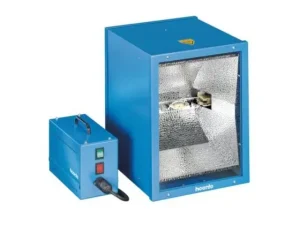
In trials with Brouns & Co, we tested a range of lamps, exposure times and working distances. We found that a UV lamp of 400W or more with a spectral output of 315–400 nm, with some visible light alongside it, gave a good cure time. A freshly painted surface exposed to UV light from about 50 cm away was dry to the touch in 5–10 minutes.
Benefits of using a UV lamp to cure Linseed oil paint
- Faster turnaround: Shut a freshly painted door or window the same day instead of waiting.
- Quicker recoating: Cut the wait between coats and keep projects moving.
- Consistent results all year: Reduce your dependence on the weather and daylight hours.
- Ideal for workshops: Paint joinery, windows, doors and furniture indoors with predictable drying.
- Control over the process: Switch the UV source on when you need it and off when you don’t.
Choosing a UV curing lamp for Linseed oil paint
Not every UV lamp is suitable. Based on our testing, look for:
- Power: 400W or higher for effective drying at a practical working distance
- Spectral output: UV-A in the 315–400 nm range (no UV-B or UV-C)
- Visible light: A broad output that includes some visible light
- Controlled exposure: The ability to set the working distance and time accurately
Not sure which lamp is right for your project? We’ll recommend equipment based on your surface area, paint system and working environment.
Getting the best results: Exposure time and distance
UV exposure speeds up drying, but more is not always better. Concentrated UV light also accelerates the ageing of linseed paint, so over-exposure can shorten the life of the finish. As a general guide:
- Keep the lamp at the recommended working distance (about 50 cm in our trials)
- Use short, controlled exposures
- Work in thin, even coats
- Monitor UV levels with a UV meter if you use the lamp regularly
Using UV light safely when curing paint
Artificial UV light sources must be used safely. UV-A exposure can harm the eyes and skin, and organisations using UV equipment have legal obligations under UK and European law. Always use appropriate eye and skin protection and keep other people out of the exposure area.
Arden Ultraviolet provides UV safety support alongside every piece of equipment, including hazard awareness training, risk management training and workplace UV radiation surveys.
Who uses UV light to dry Linseed paint?
- Joinery and window restoration specialists
- Heritage and conservation contractors
- Decorators and painters working with traditional paints
- Furniture makers and restorers
- Boat builders and other outdoor timber specialists
Why choose Arden Ultraviolet?
We combine technical UV expertise with hands-on experience of drying linseed paint. Our approach is:
- Expert guidance: Help choosing the right UV curing lamp for your process
- Proven in practice: Based on real-world trials with Brouns & Co (Oricalcum House)
- Full health and safety support: Information and training to ensure safe use and regulatory compliance
Frequently asked questions
How long does it take to dry linseed oil paint with UV light?
In our trials, linseed paint was dry to the touch in around 5–10 minutes at a distance of about 50 cm using a 400W+ UV-A lamp. Actual times vary with paint type, coat thickness, lamp output and distance.
Does UV light fully cure linseed oil paint?
UV exposure dries the surface quickly so it can be handled or recoated.
Can UV light damage linseed oil paint?
Over-exposure can accelerate ageing of the paint film, so use controlled exposure times and distances.
Which wavelength is best for curing linseed paint?
UV-A, in the 315–400 nm range, with some visible light in the output.
Is a UV lamp safe to use?
UV lamps need proper safety measures, including eye and skin protection and controlled access. We provide training and assessment services to help you comply with regulations.
Speed up your Linseed paint drying times
Whether you paint occasionally or run a busy workshop, a UV lamp can cut waiting time and give you consistent drying all year round. Talk to our team about the right UV lamp for your linseed oil paint project.
Contact us to discuss your UV light requirements
Whether you’re already using UV and looking to learn more about safety, or looking to introduce a new process, we’d love to hear from you.
Speak to a member of our team