
UV curing lamps for fibreglass and composites
Cure fibreglass in minutes, not hours
UV curing lamps for composite moulding, repairs and pipe lining. Switch on, cure to full hardness and demould. No catalyst mixing, no pot life and no waiting overnight.
UV-reactive resins (typically polyester, vinyl ester or epoxy acrylate systems) contain a photoinitiator. When it is hit by UV-A light, usually around 365 to 405 nm, it triggers rapid cross-linking. The resin stays workable under normal lighting for as long as you need, then cures on demand when you bring the lamp over it.
The result is the same glass-reinforced laminate you already make, with the timing under your control.
Get in touch
UV curing lamps for fibreglass and composites
Contact us to discuss your particular process requirements
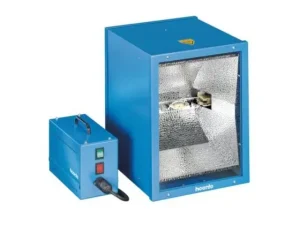
Benefits of UV curing
Cure on demand
Take as long as you need to wet out and consolidate the laminate. Cure starts only when the lamp does, typically within minutes.
Faster turnaround
Demould, sand or recoat the same day. Moulds are freed up sooner, so the same tooling makes more parts.
Less waste
No batch mixing means no resin gelling in the pot, no ratio errors and far less scrap resin and consumables.
Lower emissions and odour
Many UV systems are styrene-reduced and need no peroxide catalyst, which makes for a cleaner workshop and simpler handling.
Consistent quality
Cure is controlled by lamp output, distance and time, not by temperature, humidity or how well someone mixed the catalyst.
Repairs on site
Portable lamps let you repair boats, tanks, vehicles and structures in the field, even in cold weather that would stall a conventional cure.
Where UV curing is used
- Boat and marine hull repairs and gelcoat patching
- Tank, vessel and pipe repair and lining (including cured-in-place pipe)
- Automotive, truck and trailer body panel repairs
- Wind turbine blade maintenance and leading-edge repair
- Small and medium moulded parts made by hand lay-up
- Prototypes and one-off patterns where speed matters
- Surface coatings, topcoats and UV-cured filler on composite parts
- Bonding and tabbing of fittings and brackets
Getting a good cure
- Match lamp to resin. Check the photoinitiator’s absorption range against the lamp wavelength.
- Mind the distance. Intensity falls quickly as the lamp moves away from the surface.
- Control laminate thickness. UV penetrates glass fibre only so far, so build thick parts in layers and cure each one.
- Check your output. A radiometer confirms the lamp is delivering what the resin needs.
Know the limits: UV cannot cure through opaque fillers, dark pigments or carbon fibre. Thick or heavily pigmented laminates may need a dual-cure resin, with a UV tack cure and a conventional catalyst for the full cure. Ask us whether your application suits UV.
UV safety in the workshop
We offer full support around UV safety to ensure safety or workers and compliance with the Control of Artificial Optical Radiation at Work Regulations 2010. This includes UV risk management training for safety teams and UV hazard awareness training for those working with and around artificial UV light sources.
Contact us to discuss your UV light requirements
Whether you’re already using UV and looking to learn more about safety, or looking to introduce a new process, we’d love to hear from you.
Speak to a member of our team