UV curing equipment for Permabond adhesives
UV curing lamps, LED systems and industrial curing solutions for Permabond materials
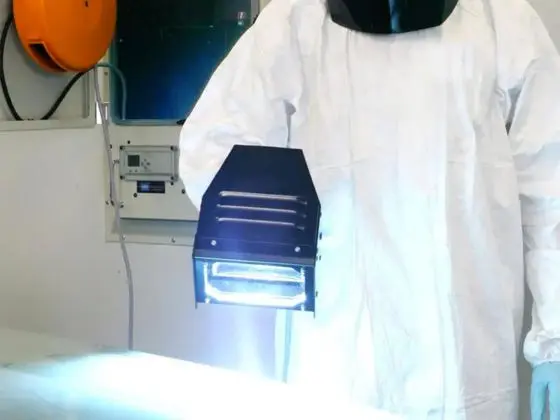
Looking for UV curing equipment for Permabond adhesives? Arden Ultraviolet supplies a range of UV curing solutions to suit different Permabond adhesive grades, component designs and manufacturing processes.
Whether you need a handheld UV lamp for manual assembly, a flood lamp for curing multiple components, a precision spot curing system or an industrial UV conveyor, we can help you identify suitable equipment for your application.
Permabond manufactures a wide range of UV-curable adhesives for bonding glass, plastics, metals and other materials. Each formulation has its own curing requirements, including wavelength, UV intensity and exposure time. Selecting the right curing equipment is therefore essential for achieving a reliable and repeatable curing process.
Arden Ultraviolet can help you match your Permabond adhesive to an appropriate UV lamp or LED curing system, with solutions for laboratory testing, manual assembly and automated manufacturing.
UV curing equipment for Permabond adhesives
We offer a range of UV curing equipment that can be considered for Permabond adhesive applications.
UV hand lamps
Handheld UV curing lamps provide a portable solution for manual assembly, repair work, product development and smaller production processes.
They can be used to cure individual adhesive joints or components where the operator needs flexibility over the positioning of the UV light source.
Potential applications include:
- Glass and metal bonding using Permabond UV adhesives.
- Plastic component assembly.
- Small-scale product assembly.
- Prototype and development work.
- Inspection and curing operations at individual workstations.
The correct lamp wavelength and output must be matched to the adhesive being used.
UV flood lamps
UV flood lamps provide a larger area of UV exposure and are useful when curing multiple components or adhesive joints at the same time.
They can be installed above a workstation or integrated into a production process to provide consistent exposure across a defined area.
Potential applications include:
- Multiple glass or plastic assemblies.
- Batch curing operations.
- Electronic component assembly.
- Coating and encapsulation applications.
- Production workstations requiring repeatable UV exposure.
Flood curing is particularly useful where several adhesive joints need to receive a controlled UV dose during the same production cycle.
UV spot curing systems
Spot curing systems deliver UV energy to a specific area or adhesive joint. They are suited to precision bonding applications where the light needs to be directed at a relatively small target.
Depending on the system configuration, spot curing equipment may use a focused light guide or an LED-based source.
Typical applications include:
- Precision glass bonding.
- Plastic component assembly.
- Optical component bonding.
- Small electronic assemblies.
- Localised adhesive curing.
- Multi-point assembly operations.
Spot curing can be particularly useful when curing individual joints without exposing an entire component or surrounding area.
UV LED curing systems
UV LED systems provide controlled output at a specific wavelength, making them suitable for adhesives formulated to respond to that wavelength.
Several Permabond products have published LED curing recommendations, including examples using 395 nm and 400 nm LED sources.
Potential benefits of LED curing include:
- Narrow-band wavelength output.
- Rapid switching and controllable operation.
- Compact equipment configurations.
- Integration into automated production processes.
- Consistent output when properly maintained and monitored.
LED wavelength selection is critical. A 395 nm LED should not automatically be assumed suitable for every Permabond adhesive.
UV conveyor curing systems
For higher-volume manufacturing, UV conveyor systems can provide a repeatable curing process as components pass beneath a UV lamp or LED source.
Conveyor systems can be considered for:
- Repetitive plastic bonding operations.
- Glass component production.
- Coated and encapsulated components.
- Batch-to-continuous production processes.
- Automated assembly and manufacturing lines.
Conveyor speed, lamp output, curing distance and component positioning all need to be considered to ensure the required exposure is achieved.
Specialist and integrated UV curing equipment
Some manufacturing processes require more than a standalone UV lamp. Arden can help investigate specialist curing configurations and equipment integration for applications with particular space, production or exposure requirements.
This may include bespoke mounting arrangements, shielding, interlocks, process controls and integration with existing machinery.
Which Permabond adhesives can be cured using UV equipment?
Permabond produces a range of UV-curable adhesives for different materials and applications. The table below highlights selected grades and their typical applications.
The wavelength information is indicative of published manufacturer data. Always check the latest technical data sheet for the exact product before specifying a curing system.
| Permabond grade | Typical application | UV wavelength requirements |
|---|---|---|
| UV605 | Low-viscosity glass bonding and capillary bonding | 365–400 nm |
| UV610 | High-strength glass-to-metal bonding | 365–400 nm |
| UV620 | General-purpose glass and crystal bonding | 365–400 nm |
| UV625 | High-viscosity gel for glass and metal bonding | 365–400 nm |
| UV670 | Flexible glass-to-metal and metalised plastic bonding | 365–400 nm |
| UV6160 | Optically clear bonding applications | Confirm with current TDS |
| UV6231 | Glass and crystal bonding with moisture and weathering resistance | 365–400 nm |
| UV630M | Plastic bonding, including polycarbonate | 365–420 nm; 395 nm LED example |
| UV632 | Acrylic and plastic bonding, including UV-stabilised plastics | 365–420 nm |
| UV639 | Acrylic, polycarbonate and PETG bonding | 365–420 nm |
| UV640M | Medium-viscosity plastic bonding | Confirm with current TDS |
| UV643 | Rigid plastic and metal combinations | 365–420 nm; 400 nm LED example |
| UV645M | Plastic bonding and selected sealing applications | 365–420 nm; 395 nm LED example |
| UV648 | High-viscosity plastic bonding | 365–420 nm |
| UV649M | Thixotropic gel for plastic bonding | Confirm with current TDS |
| UV681 | Electronics coating and conformal coating applications | 320–420 nm |
| UV683 | Coating, doming and encapsulation | 320–420 nm |
| UV7141 | Glass, metal, mirror and ceramic-coated glass bonding; dual-cure application | 365–420 nm |
Matching UV curing equipment to your Permabond adhesive
The adhesive grade is the starting point when selecting a UV curing system. The equipment must deliver suitable light at the bond line, at the required intensity and for sufficient time.
How to choose the right UV curing lamp
Before selecting equipment for a Permabond adhesive, several technical factors need to be considered.
- Wavelength: Check the adhesive manufacturer’s specified wavelength range and whether a particular LED wavelength is recommended.
- UV intensity: The irradiance reaching the adhesive affects how quickly the material cures and whether the required dose can be achieved.
- Exposure time: The curing time must suit the material and the production process.
- Component materials: Glass, plastics and other substrates can absorb or transmit different wavelengths. This can affect the energy reaching the adhesive.
- Bond-line geometry: The adhesive must receive sufficient light. Recesses, overlapping parts and shadowed joints can prevent adequate exposure.
- Production volume: A handheld lamp may be suitable for occasional manual work, while higher-volume processes may benefit from flood, spot or conveyor curing equipment.
- Process verification: UV output should be checked at the working position using appropriate measurement equipment. Curing trials should be carried out under the intended production conditions.
Why choose Arden Ultraviolet for Permabond curing equipment?
Choosing the right UV curing equipment is about more than finding a lamp with a matching wavelength. The system must suit the adhesive, the component and the way the product is manufactured.
Arden Ultraviolet can help you explore suitable equipment across a range of applications, from manual assembly through to industrial production.
We can help you consider:
- Handheld UV curing lamps.
- UV flood lamps.
- UV spot curing systems.
- UV LED curing equipment.
- Conveyor curing systems.
- Specialist and integrated UV curing arrangements.
- UV measurement and monitoring requirements.
Whether you are currently using Permabond UV610, UV605, UV630M, UV639, UV643 or another grade, we can help investigate a suitable curing solution.
Call 01564 200 826 or contact us to discuss your Permabond adhesive and UV curing equipment requirements.
UV curing safety
UV curing equipment must be selected, installed and operated with suitable safety controls. Exposure to UV radiation can harm the eyes and skin.
Arden Ultraviolet offers a free UV safety webinar to help organisations understand UV hazards and safe working practices. Further support is also available around UV risk management, exposure assessments and hazard awareness training where required.
Frequently asked questions
What UV curing equipment is suitable for Permabond adhesives?
The correct equipment depends on the adhesive grade and application. Options can include handheld UV lamps, flood lamps, spot curing systems, UV LED systems and conveyor curing equipment. The wavelength and required UV output must be checked against the adhesive’s technical data sheet.
Can Arden supply handheld UV lamps for Permabond adhesives?
Arden Ultraviolet supplies a range of UV curing equipment, including handheld lamp options. The appropriate model depends on the adhesive, required wavelength, intensity and production requirements.
Can Permabond adhesives be cured using UV LED equipment?
Yes, several Permabond grades have published LED curing information. However, the correct LED wavelength must be matched to the formulation. Some grades include specific 395 nm or 400 nm LED examples.
What is the difference between UV spot curing and flood curing?
Spot curing directs UV energy towards a localised area or adhesive joint. Flood curing exposes a larger area, making it useful for multiple components or larger assemblies.
Do I need a 365 nm, 395 nm or 400 nm UV lamp?
This depends on the Permabond adhesive. Different grades have different spectral requirements. Check the manufacturer’s current technical data sheet before selecting the lamp.
Can UV curing equipment be integrated into a production line?
Yes. UV curing equipment can be configured for automated processes, including conveyor-based systems and specialist production installations. The equipment must be designed around the required exposure, component handling and production speed.
Is UV curing equipment safe to use?
UV curing equipment requires appropriate protection and risk controls because UV exposure can harm the eyes and skin. Arden offers a free UV safety webinar, alongside further support with UV risk management, exposure assessments and hazard awareness training.
Request advice on UV curing equipment for Permabond adhesives
Tell us which Permabond adhesive you are using, what material you are bonding and how your production process operates.
Arden Ultraviolet can help you investigate suitable UV hand lamps, flood lamps, spot curing systems, LED equipment and conveyor solutions.
Contact us to discuss your UV light requirements
Whether you’re already using UV and looking to learn more about safety, or looking to introduce a new process, we’d love to hear from you.
Speak to a member of our team