UV-C disinfection of conveyor belt surfaces
Reduce microbial contamination on food conveyor belts with continuous UV-C disinfection.
Conveyor belts are an essential part of food production, but their constant contact with food products can create opportunities for microbial contamination and cross-contamination between processing stages.
UV-C disinfection provides an additional layer of hygiene by reducing bacteria and other microorganisms on exposed belt surfaces as they move through production.
Arden Ultraviolet supplies UV-C disinfection solutions designed for demanding food processing environments, helping businesses strengthen their hygiene programmes without relying on additional chemical treatments at every stage of the production process.
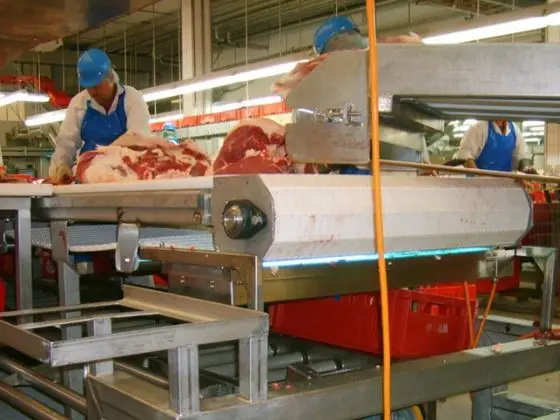
UV-C disinfection systems for conveyor belts
Contact us to discuss your specific disinfection requirements
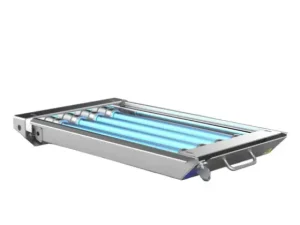
Our UV-C disinfection solutions are designed to integrate with conveyor belts and production lines, providing targeted treatment of exposed surfaces during operation. Systems can be specified to suit different belt widths and conveyor configurations, including applications where equipment must withstand demanding washdown and cleaning regimes.
With robust stainless steel construction, waterproof design options and UV-C lamps operating at a germicidal wavelength of 254 nm, these systems offer a practical approach to improving conveyor hygiene in food manufacturing and processing environments.
Applications include:
- Food conveyor belts and production lines
- Meat and poultry processing
- Fish and seafood processing
- Dairy and cheese production
- Bakery and confectionery manufacturing
- Ready meals and prepared foods
- Food cutting belts and transfer conveyors
- Packaging and product handling lines
UV-C conveyor belt disinfection systems
Explore our UV-C equipment for continuous, in-line treatment of conveyor belts and other exposed surfaces in food production environments.
Designed for permanent, in-line disinfection, the FBK Series provides targeted UV-C treatment for conveyor belts, cutting belts, plastic link belts, steel belts and other suitable production surfaces. The system is available in different configurations to accommodate varying belt widths and application requirements.
Key features include:
- 254 nm UV-C output – germicidal ultraviolet light to reduce microbial contamination on exposed surfaces.
- Stainless steel construction – durable equipment suited to demanding food production environments.
- Waterproof design – IP68 rated disinfection modules for applications requiring robust protection against water ingress.
- Configurable belt coverage – different module lengths and configurations to suit the conveyor width.
- Continuous in-line operation – designed to treat belt surfaces as they move through production.
- Long lamp life – UV-C lamps rated for up to 12,000 hours of operation.
The appropriate configuration depends on belt material, width, operating speed, contamination levels and the required UV dose.
How does UV-C conveyor belt disinfection work?
UV-C disinfection uses short-wavelength ultraviolet radiation to inactivate microorganisms by damaging their genetic material, preventing them from reproducing. At the germicidal wavelength of 254 nm, UV-C is widely used for microbial control in food processing, healthcare and other hygiene-critical environments.
For conveyor applications, UV-C lamps are positioned to irradiate the exposed belt surface as it passes through the treatment area. Correctly specified equipment delivers a suitable UV dose to the target surface, helping reduce microbial contamination between cleaning cycles and during production.
Unlike chemical treatments, UV-C does not leave a chemical residue on treated surfaces. It can therefore complement existing food hygiene procedures without introducing additional disinfectant chemicals at the point of treatment.
However, UV-C is a line-of-sight treatment. Its effectiveness depends on the dose delivered to the surface, and contamination hidden beneath food debris, within belt joints or in shaded areas may not receive sufficient exposure. Routine cleaning and validated sanitation procedures remain essential.
Benefits of UV-C disinfection for food conveyor belts
Reduced risk of cross-contamination
Conveyor belts repeatedly come into contact with food products, making them a potential route for transferring microorganisms between items or processing stages. By reducing microbial contamination on exposed belt surfaces, UV-C treatment can help strengthen cross-contamination controls and support a more consistent food safety programme.
Improved food production hygiene
Maintaining hygienic food contact surfaces is essential in environments where bacteria such as Listeria monocytogenes, Salmonella and Escherichia coli can pose a risk. UV-C disinfection can provide an additional control measure for conveyor belts and other exposed production surfaces when the equipment and treatment conditions are appropriately validated for the target microorganisms.
Continuous treatment during production
Unlike sanitation methods that require a dedicated cleaning stage, an appropriately installed in-line UV-C system can treat exposed belt surfaces as the conveyor moves. This allows businesses to introduce an additional hygiene control without necessarily interrupting normal belt movement, subject to the installation design and production process.
Reduced dependence on additional chemical treatments
UV-C disinfection works without applying chemical disinfectants to the treated surface and leaves no chemical residue. This can reduce the need for additional chemical applications in suitable parts of a production process, although it does not eliminate the need for detergents, approved sanitisers or established cleaning procedures.
Support for operational efficiency
Automated, in-line disinfection can reduce the need for separate manual intervention at certain stages of production. Depending on the existing sanitation programme and validated results, this may help streamline hygiene processes while maintaining appropriate microbial controls.
Hygienic equipment for demanding environments
Food processing equipment must withstand frequent cleaning and, in some facilities, intensive washdown. Stainless steel construction and appropriately rated waterproof housings help equipment withstand demanding operating conditions. The selected system should be matched to the cleaning methods, environmental conditions and hygiene requirements of the installation.
Potential to support product quality and shelf life
Reducing microbial contamination at the point of product contact may help limit opportunities for spoilage and contamination transfer. Any improvement in product quality, shelf life or food waste will depend on the food product, organisms present, treatment effectiveness and wider hygiene controls; these outcomes should be demonstrated through application-specific trials rather than assumed.
Applications of UV-C belt disinfection in the food industry
Meat and poultry processing
Meat and poultry production lines rely on conveyors to transfer products between cutting, portioning, inspection and packaging stages. These belts can become contaminated through direct product contact and organic residues. UV-C treatment can provide an additional microbial reduction step on exposed belt surfaces, helping support hygiene controls between routine cleaning operations.
Fish and seafood processing
Moisture, organic residues and frequent product contact can make conveyor hygiene particularly challenging in seafood processing. Waterproof UV-C equipment, correctly specified for the installation, can help reduce microbial contamination on exposed belt surfaces while complementing established cleaning and sanitation procedures.
Dairy and cheese production
Conveyor systems are widely used for moving cheese, dairy products, containers and packaging materials. UV-C treatment can support hygiene management on suitable exposed surfaces, particularly where equipment operates in areas with frequent product handling or moisture exposure.
Bakery and confectionery production
Belts used to transport dough, baked goods, confectionery and other products can provide opportunities for transferring spoilage microorganisms between items. UV-C treatment can complement routine hygiene procedures on compatible conveyor materials and exposed surfaces.
Ready meals and prepared foods
Prepared food production frequently involves multiple handling stages between cooking, cooling, assembly and packaging. Where products are exposed and conveyor contact is frequent, appropriately designed UV-C treatment can provide an additional control measure to help reduce surface contamination.
Food packaging and product transfer
Conveyors used to transfer products, containers and suitable packaging materials may also benefit from targeted UV-C treatment. System selection should account for the material being treated, UV transmission, exposure requirements and the position of the equipment in the production process.
Integrating UV-C into an existing food hygiene programme
UV-C disinfection is most effective when incorporated into a broader, risk-based food safety management system rather than treated as a standalone solution.
An effective installation should consider:
- Belt material and condition: Different plastics, polymers, metals and belt finishes respond differently to UV-C exposure. Material compatibility should be confirmed.
- Conveyor speed: Faster belt speeds reduce exposure time, which can lower the UV dose received by each section of the belt.
- Lamp positioning and coverage: Lamp distance, output, belt width and surface geometry influence the dose delivered. Shadowed areas may require a different approach.
- Surface cleanliness: Food debris, grease, moisture and organic matter can shield microorganisms from UV-C radiation. Cleaning remains essential.
- Required microbial reduction: The appropriate treatment must be determined against the target microorganisms and the specific application.
- Cleaning and maintenance: Lamp output can decline with age or contamination, so inspection, cleaning and replacement should follow the manufacturer’s recommendations.
- Safety controls: UV-C exposure must be controlled to protect operators and maintenance personnel, with suitable engineering measures, risk assessments and training.
Where food safety assurance is required, the installation should be validated under representative operating conditions, including realistic belt speeds, surface contamination and cleaning procedures.
Why choose Arden Ultraviolet for conveyor belt disinfection?
Arden Ultraviolet supplies UV equipment for hygiene-critical applications across the food industry and other demanding sectors. Our approach is to match the equipment to the application, taking account of production requirements, installation conditions and workplace UV safety.
For conveyor belt disinfection, this means considering the belt width, material, speed, cleaning regime and required level of microbial reduction before recommending a suitable configuration.
Our support can help you assess your requirements, select appropriate equipment and understand the safety measures needed for its use in a food production environment.
Whether you are looking to introduce UV-C disinfection to a new production line or strengthen an existing hygiene programme, we can help you identify a solution suited to your process.
UV-C safety in food production environments
UV-C radiation can damage the eyes and skin, so systems must be installed and operated with appropriate safeguards. Direct exposure should be prevented through suitable equipment design, shielding, access controls and, where required, interlocks and warning signage.
In Great Britain, employers must assess and manage risks from artificial optical radiation under the Control of Artificial Optical Radiation at Work Regulations 2010. Equipment selection, installation, commissioning, maintenance and staff training should all form part of the safety assessment.
Arden Ultraviolet can provide guidance on UV risk management, workplace exposure assessments and hazard awareness training to help organisations manage the risks associated with UV-C equipment.
Frequently asked questions about UV-C conveyor belt disinfection
What is UV-C conveyor belt disinfection?
UV-C conveyor belt disinfection uses germicidal ultraviolet light to inactivate microorganisms on exposed conveyor surfaces. It can be integrated into food production lines to provide an additional microbial reduction step during operation.
Can UV-C disinfect food conveyor belts during production?
Yes. An appropriately designed in-line system can irradiate exposed belt surfaces as they move through the treatment area. Effectiveness depends on conveyor speed, lamp output, positioning, surface condition and the UV dose delivered. The installation must also incorporate appropriate safety controls.
Does UV-C conveyor disinfection replace cleaning?
No. UV-C is not a substitute for physical cleaning or an established sanitation programme. Food residues, grease, biofilms and shaded areas can prevent sufficient UV exposure. Belts must be cleaned appropriately, and the UV-C process should be validated for its intended use.
Which microorganisms can UV-C inactivate?
UV-C can inactivate a range of bacteria, yeasts, moulds and viruses when they receive a sufficient dose. The actual reduction varies by microorganism, surface material, contamination level and treatment conditions. Claims about specific organisms should be supported by suitable validation data.
Is UV-C suitable for food processing environments?
UV-C can be used as part of food processing hygiene programmes when equipment is suitable for the environment and the application is properly designed. Stainless steel construction and waterproof housings can be advantageous in demanding cleaning environments. Food contact applications should be assessed individually to establish material compatibility, treatment effectiveness and appropriate hygiene controls.
Can UV-C be used on plastic and stainless steel conveyor belts?
UV-C treatment can be suitable for many plastic and stainless steel conveyor systems, but effectiveness and material compatibility vary. Belt composition, surface finish, UV exposure and the physical layout of the conveyor should be assessed before installation.
Does UV-C leave chemical residues on conveyor belts?
No. UV-C is a physical disinfection method and does not apply chemical disinfectants to the surface. It therefore leaves no chemical disinfectant residue, although routine cleaning and any required chemical sanitation must still be carried out according to the hygiene programme.
How do I choose the right UV-C system for my conveyor?
The system should be selected according to belt width, material, conveyor speed, installation space, cleaning requirements and the target microorganisms. The required UV dose and the practical level of surface coverage must also be considered.
Discuss your conveyor belt disinfection requirements
Looking to improve conveyor hygiene and reduce the risk of microbial cross-contamination in your food production facility?
Arden Ultraviolet can help you identify a suitable UV-C disinfection system based on your conveyor configuration, operating conditions and hygiene requirements.
Contact us to discuss your application and find out how in-line UV-C disinfection could complement your existing food safety programme.
Contact us to discuss your UV light requirements
Whether you’re already using UV and looking to learn more about safety, or looking to introduce a new process, we’d love to hear from you.
Speak to a member of our team