Ultraviolet (UV-C) disinfection systems are widely used across the food industry as an additional control measure to reduce the risk of microbial contamination. They are often installed in conveyor tunnels, packaging transfer points, and other transition areas where products move from lower risk environments into high-care or high-risk zones.
When properly specified and maintained, UV-C can provide an effective non-chemical method of reducing microorganisms on surfaces and packaging. However, the effectiveness of any UV system depends on one critical factor: the delivered UV dose.
A common misconception is that if UV lamps are switched on, the system is functioning effectively. In reality, the presence of light alone does not guarantee that sufficient UV-C energy is being delivered to achieve microbial reduction.
Dose determines effectiveness
The germicidal performance of UV systems is determined by dose, which is the product of UV intensity and exposure time. If either of these variables decreases, the total delivered dose also decreases. Over time, this can significantly reduce the disinfection performance of the system.
Independent research into UV-C inactivation of common foodborne microorganisms consistently shows that meaningful reductions in organisms such as E. coli, Salmonella, and Listeria monocytogenes typically require doses well above the levels delivered by many aging or poorly maintained systems. Within much of the food sector, many operators aim for minimum dose levels in the region of 300 J/m², with some targeting closer to 600 J/m² depending on the application and level of microbial reduction required.
Without measuring the dose being delivered, it is difficult to confirm whether a system is achieving the intended level of control.
A common scenario in existing installations
During a recent visit to a food production facility, UV disinfection tunnels installed several years earlier were reviewed as part of a broader assessment relating to the Control of Artificial Optical Radiation at Work Regulations 2010.
During the assessment, a simple but important question was raised: how is the effectiveness of the UV process currently monitored?
The equipment had been installed approximately a decade earlier as a precautionary control to reduce the risk of contamination transfer between hygiene zones. While the systems were operational and the UV lamps illuminated, there was no established method for measuring the UV dose being delivered throughout the process.
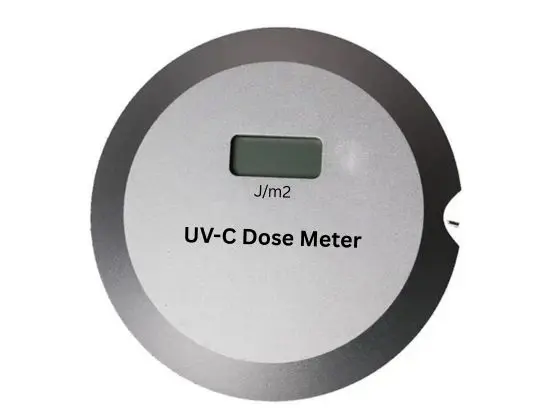
A UV-C dose meter was subsequently introduced to verify performance within the tunnels. When measurements were taken, the delivered dose levels were found to be approximately 100 J/m².
This result was not necessarily surprising. Many UV systems installed years earlier were implemented as an additional precaution rather than as a tightly controlled and validated process step. Over time, factors such as lamp aging, fouling of protective sleeves, reflector degradation, or electrical component wear can significantly reduce the output of UV lamps.
Importantly, these reductions often occur gradually and without obvious warning signs. Indicator lights may still show that lamps are powered, yet the germicidal output can be far lower than originally intended.
The invisible decline of UV systems
Unlike many other control measures used in food manufacturing, UV performance does not always degrade in an obvious way. The lamps may continue to emit visible light even when the germicidal UV-C output has declined substantially.
Lamp output naturally decreases with operating hours. Dust, grease, and product residues can accumulate on lamp surfaces or quartz sleeves, reducing UV transmission. Reflective surfaces inside tunnels may degrade or become contaminated, reducing the amount of UV energy reaching the product.
Because these changes occur gradually, facilities can unknowingly operate systems that deliver only a fraction of the intended disinfection dose. Without routine measurement, this decline often goes unnoticed.
The compliance and food safety perspective
From a food safety and compliance standpoint, this presents several potential challenges.
Many food safety standards require control measures to be validated, verified, and maintained. If UV disinfection forms part of a site’s contamination control strategy, there must be evidence that it continues to function as intended.
Where UV systems are not monitored, organisations may struggle to demonstrate that the control remains effective over time. This can become particularly relevant during audits or investigations where documented evidence of control measures is required.
More importantly, reduced UV dose could mean that microorganisms are not being reduced to the levels originally assumed when the system was installed. In areas where products move from lower risk environments into high-care processing zones, this could increase the risk of unwanted microbial transfer.
Treating UV as a managed control measure
The solution is not complicated. UV systems simply need to be treated like any other process control within a food safety management system.
This begins with understanding the target dose required for the application. Once that baseline has been established, the delivered dose can be measured and recorded to confirm that the system is performing as expected.
Routine verification checks allow facilities to identify gradual declines in performance before they become significant. Maintenance activities such as lamp replacement, cleaning, and inspection can then be planned based on measured performance rather than assumptions.
In practice, a relatively simple monitoring approach can provide confidence that the system continues to deliver the level of disinfection originally intended.
From assumption to evidence
UV disinfection can be a valuable additional safeguard in food production environments. However, its effectiveness should never be assumed. A lamp that is switched on is not necessarily delivering the dose required to control microbial risk.
By measuring and monitoring UV dose over time, food manufacturers can move from assumption to evidence – ensuring that the systems they rely on continue to perform as expected and that contamination risks remain under control.