UV Radiation Safety of UV-C Disinfection Systems in Food Manufacturing
UV-C disinfection is an increasingly important tool in food manufacturing and processing — offering a chemical-free method of reducing microbial contamination on surfaces, in air and in water. But UV-C is the most hazardous form of UV radiation, and its use in food environments creates significant occupational health obligations that must be properly addressed.
UV-C Disinfection in Food Manufacturing and Processing
The food manufacturing, processing and packaging industries face constant pressure to maintain the highest standards of hygiene and microbial control — to protect product safety, extend shelf life, reduce waste and meet the increasingly stringent requirements of retailers, auditors and regulators. UV-C disinfection has become an important part of the hygiene toolkit in many operations, valued for its effectiveness against a broad spectrum of microorganisms, its speed of action, and the fact that it leaves no chemical residues.
Common applications of UV-C disinfection in food environments include:
- Surface disinfection of conveyor belts, production line surfaces and food contact equipment during or between production runs, using fixed UV-C lamp arrays or mobile UV-C trolleys.
- Air disinfection in production areas, cold stores and packaging environments, using upper-room or in-duct UV-C systems to reduce airborne microbial contamination.
- Water treatment — UV-C is widely used to disinfect process water, rinse water and cooling water, providing a chemical-free alternative or complement to chlorination.
- Mould and yeast control on product surfaces, particularly in bakery and dairy environments where condensation and organic matter create persistent contamination challenges.
- Disinfection of packaging materials, including bottles, containers and wrapping films, prior to filling or sealing.
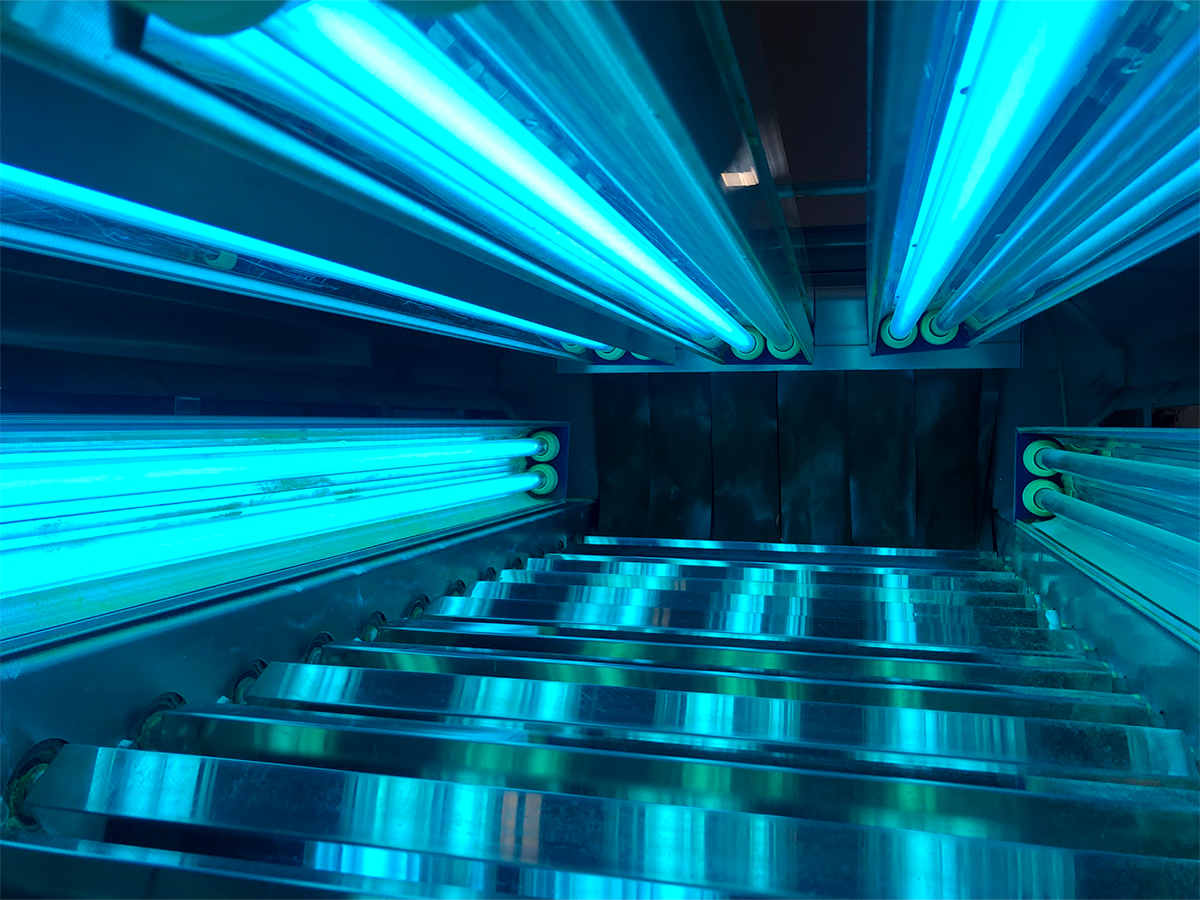
UV-C systems in food manufacturing range from permanently installed overhead lamp arrays and conveyor-integrated systems to portable mobile units used for area disinfection. In all cases, the germicidal effectiveness of UV-C (its ability to damage the DNA and RNA of microorganisms) is precisely what also makes it dangerous to human tissue. The wavelengths that make UV-C so effective as a disinfectant (principally around 254 nm for conventional low-pressure mercury lamps) are also the wavelengths that cause the most rapid and serious harm to the eyes and skin.
Legal Obligations Under the Control of Artificial Optical Radiation at Work Regulations 2010
UV-C emitting systems are among the highest-risk artificial optical radiation sources encountered in any workplace. The CAOR 2010 Regulations impose strict obligations on food manufacturing employers who operate UV-C disinfection equipment, and the potential for acute harm from even brief unprotected exposure to UV-C makes compliance in this area particularly critical.
The Regulations require food sector employers to:
- Measure and assess the risk to workers from exposure to UV-C radiation from disinfection equipment, including during normal operation, servicing, maintenance and any foreseeable fault or failure scenarios.
- Implement appropriate engineering controls — such as interlocks, guarding, automatic shut-off systems and physical barriers — to prevent unintended exposure during operation.
- Establish and enforce safe operating procedures, particularly for processes such as lamp replacement, system maintenance and manual operation of mobile UV-C units.
- Provide workers with specific information and training on the hazards of UV-C radiation, the control measures in place, and the correct use and limitations of protective equipment.
- Document the assessment process, controls, training and any incidents — and review the assessment whenever equipment, processes or working arrangements change.
In practice, many food manufacturing organisations have introduced UV-C disinfection systems in response to operational or customer-driven hygiene requirements, without a corresponding review of the occupational health and safety obligations that come with them. The procurement of UV-C equipment does not automatically satisfy the requirements of the Regulations – a formal risk assessment and documented control framework are essential regardless of the type or scale of the system installed.
Health Risks from UV-C Exposure
UV-C radiation (100–280 nm) is almost entirely absorbed by the outer layers of biological tissue, and this concentration of energy at the surface is the basis for both its germicidal effectiveness and its potential to cause acute harm. UV-C is the most immediately hazardous form of UV radiation from an occupational health perspective, and even brief, accidental exposure can cause serious injury.
- Photokeratitis — often called ‘arc eye’ or ‘welder’s flash’ — is a painful inflammation of the cornea caused by UV-C exposure. Even a few seconds of unprotected exposure to a UV-C source at close range can cause this condition, the symptoms of which (intense pain, photophobia, tearing and temporary vision loss) typically appear several hours after exposure.
- Erythema — UV-C causes rapid, severe reddening and burning of exposed skin, with effects apparent after much shorter exposure times than sunburn caused by UV-B.
- Long-term skin risks — chronic UV-C exposure, even at sub-acute levels, is associated with cumulative DNA damage in skin cells and an increased risk of skin cancer. The long-term consequences of repeated low-level UV-C exposure in occupational settings are an area where the evidence continues to develop, and the precautionary principle strongly supports minimising exposure wherever possible.
- Systemic effects — there is emerging research on the possible systemic effects of UV-C exposure, including on immune function, though this area of occupational health remains incompletely characterised.
In food manufacturing environments, where UV-C systems may be operated by production workers, maintenance engineers and cleaning teams (some of whom may have little awareness of the specific hazards involved) the risk of accidental exposure is real and ongoing. The fact that UV-C radiation is invisible, and that the consequences of exposure are often delayed, means that incidents can go unrecognised or unreported, and that workers may be exposed repeatedly without realising the cumulative harm being done.
How Arden Ultraviolet Can Help
Arden Ultraviolet works with food manufacturers, processors and packaging operations to help them introduce and operate UV-C disinfection systems safely and in full compliance with the CAOR 2010 Regulations. We understand both the operational requirements of food environments and the specific hazards associated with UV-C equipment, and we provide independent, practical support from equipment selection through to ongoing compliance management.
Our services for food sector UV-C operations include:
- On-site UV Exposure Assessment — measurement of UV-C irradiance levels in the vicinity of disinfection equipment, assessment of exposure for all relevant worker groups (including those involved in operation, maintenance and cleaning), and comparison against the statutory ELVs, with a full written report and compliance statement.
- UV Risk Management Training for safety managers, hygiene teams and those responsible for UV-C processes — covering the specific hazards of UV-C radiation, the statutory requirements, and the principles of safe system design and operation.
- UV Hazard Awareness Training for production workers, maintenance engineers and others who work with or near UV-C disinfection systems — a legal requirement under the Regulations and an essential element of any compliant safety programme.
- UV equipment assessment and PPE validation — independent evaluation of installed UV-C systems, assessment of engineering controls (interlocks, guarding, warning systems), and verification that protective eyewear, gloves and skin protection are appropriate for the specific UV-C wavelengths and irradiance levels produced by your equipment.
If your organisation operates UV-C disinfection equipment and you are not confident that your current arrangements fully meet the requirements of the CAOR 2010 Regulations, we would welcome the opportunity to discuss your specific situation and how we can help.
UV health and safety
Any organisation operating artificial UV light sources should have a full understanding of the risks, statutory exposure limits and legal obligations to protect workers and ensure regulatory compliance.
Want to learn more about UV safety?
Join a FREE UV safety webinar